


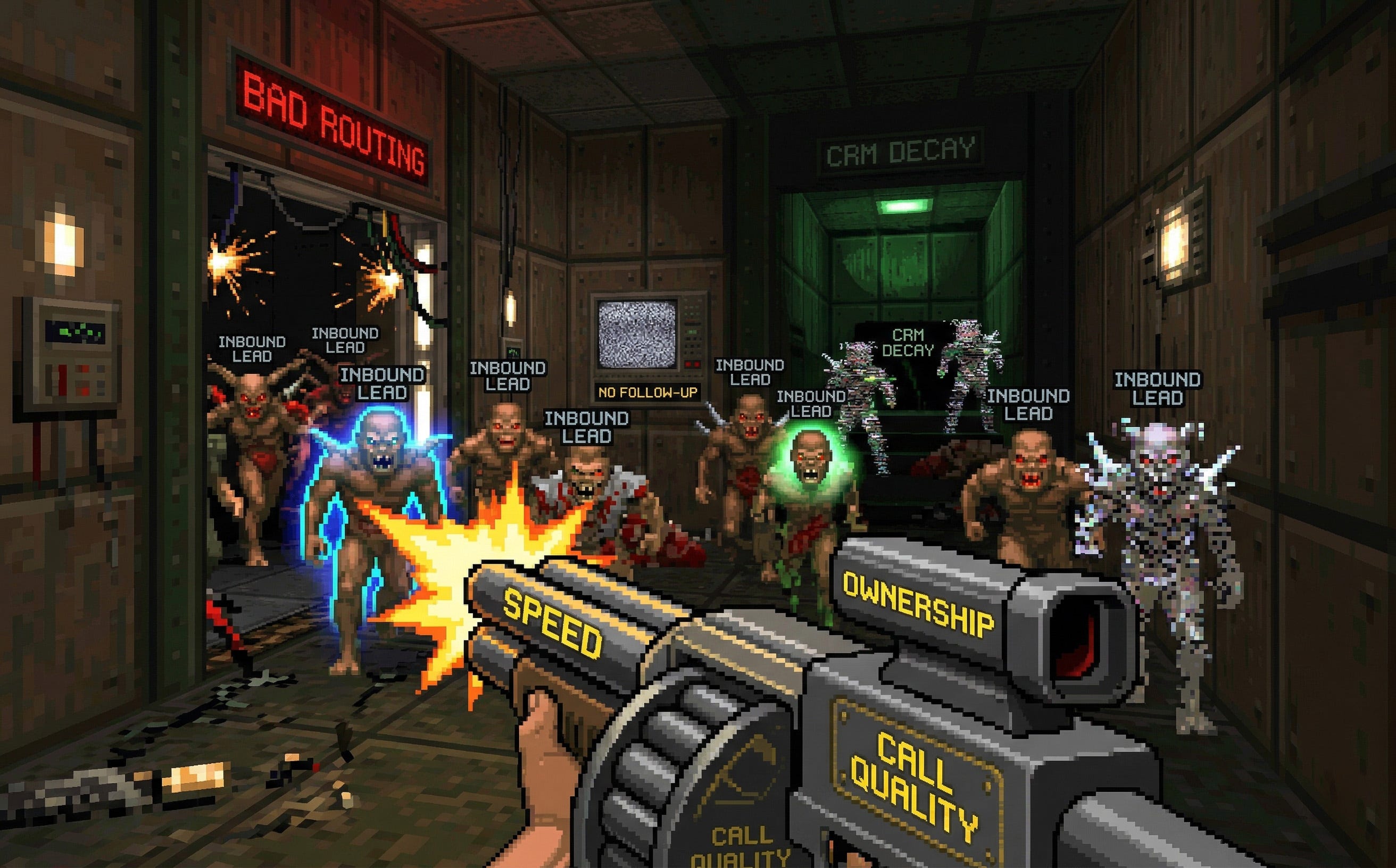
The Situation
You’re generating demand.
Campaigns are live, content is working, inbound is coming in.
But the system behind it feels… fragile.
Leads don’t get followed up fast enough
Ownership is messy
Leads get stuck in vague states like “attempted to connect” or “connected”
CRM data isn’t trustworthy (shadow spreadsheets exist)
SDR quality is inconsistent
You’ve seen the worst version of this:
A high-value inbound lead from a Fortune 500 company enters the system… and disappears into operational gaps.
The machine isn’t built to handle reality.
What People Think Is Happening
Most teams think this is a tooling or staffing issue:
“We need better CRM setup”
“We need more SDRs”
“We should improve lead scoring”
“We need more automation”
So they layer complexity:
More fields
More workflows
More dashboards
But complexity just hides where the system is actually breaking.
What’s Actually Happening
GTM ops fails when it’s designed as support infrastructure instead of conversion infrastructure.
Sales ops and marketing ops are not back-office functions.
They are the system that determines:
Whether demand becomes pipeline
Whether pipeline becomes revenue
The critical mistake:
Most teams optimize for process completeness.
High-performing teams optimize for speed, ownership, and experience at the exact moment of intent.
Inbound is not just a lead.
It’s someone knocking on your front door.
And most companies answer late, awkwardly, or not at all.
The Framework
1. Design for Speed First (Everything Else Is Secondary)
Speed is the highest-leverage variable in inbound conversion.
You should engineer for:
Sub-5 minute response time (not “same day”)
Immediate routing on form submission
Parallel alerts (Slack, email, CRM)
The 15-minute window matters because:
Buyer intent is still active
Context hasn’t decayed
You’re present when they knocked
If you’re handling hundreds of inbound leads daily, automate lead scoring, but don’t confuse prioritization with permission to delay.
Speed is the baseline.
2. Make Ownership Binary and Instant
Every inbound lead should have:
One clear owner
Assigned within seconds
Automatically reassigned when needed
No:
Shared queues
Manual assignment
Zombie states like “connected” that stay unchanged for months
You’ve seen what happens otherwise:
Ex-employees still own accounts
Leads sit untouched
Accountability disappears
3. Build Around Time-to-First-Connection
Lead scoring helps you prioritize.
But time-to-first-connection determines whether you convert.
Track:
Form submit → first outreach
Assignment → SDR action
Outreach → actual human connection
Then design for behavior:
High-value accounts get immediate priority
Systems nudge or reroute if no action happens fast enough
Performance is measured on connection, not activity logs
A “high score” lead that waits 3 hours is less valuable than a medium one called in 3 minutes.
4. Control the First Human Interaction
The first SDR conversation is not a soft touch.
It is a conversion event.
And most teams leave it unstructured.
You’ve heard the result:
Weak articulation of the product
Rambling, unfocused calls
Messaging that doesn’t match what marketing promised
Fix it with:
Structured talk tracks tied to real positioning
Ongoing call reviews as a core operating rhythm
Feedback loops tied to actual conversion outcomes
If marketing creates demand and the first call mishandles it, the system is broken at the most expensive point.
5. Enforce Brand and Narrative Inside Sales
Brand is not a top-of-funnel concern.
It carries through the entire “pain journey” of the buyer.
And it often breaks inside sales.
You see it in subtle ways:
Reps building their own decks
AI-generated visuals that distort the brand
Messaging that drifts from core positioning
This creates:
Inconsistent buyer experience
Reduced trust, especially in enterprise deals
Friction across the journey
Your ops system should enforce:
Centralized, approved assets
Clear narrative frameworks
Visibility into what sales actually sends
The Test
Your GTM ops isn’t “oiled” if:
You constantly find inbound leads mishandled
You can’t consistently respond within 15 minutes
Leads ever sit without a clear owner
Pipeline stages stagnate without movement or intervention
SDR call quality varies widely
Sales creates its own materials
Fantastic ... Although I do not know anything about the architecture of computer systems, I feel I have been guided through the thicket of complex ideas with skill and clarity.