


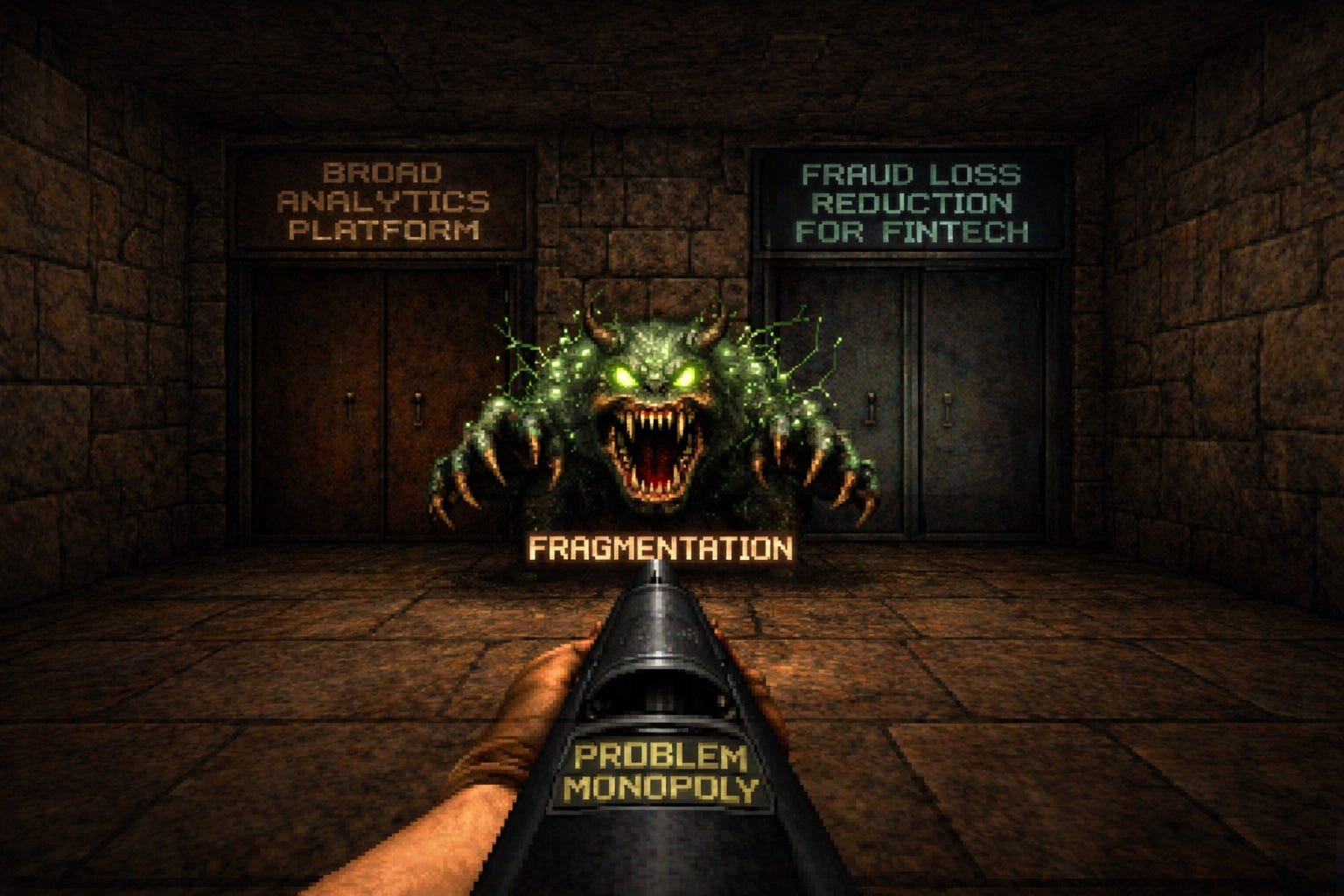
The Situation
This is for product marketing leaders and founders operating in complex B2B environments where:
The product does many things.
Sales serves multiple industries.
The roadmap keeps expanding.
Messaging changes depending on who’s presenting.
Everyone is working hard. There are launches, field enablement sessions, analyst briefings, landing page refreshes. The team is not lazy. In fact, it’s probably exhausted.
Yet if you ask five AEs what the company does, you get five slightly different answers.
Externally, prospects nod politely… and still ask, “So what exactly do you replace?”
It doesn’t feel like failure. It feels like fog.
What People Think Is Happening
The usual diagnosis goes something like this:
“We need clearer messaging.”
“We need stronger differentiation.”
“The product is too complex to simplify.”
“We just need a bigger launch.”
“Sales needs better enablement.”
So the team refines taglines, updates the website, and builds new decks for each segment. Again.
For a quarter, things feel sharper, but the fragmentation returns. It always does.
Because the underlying issue is structural.
What’s Actually Happening
Without a problem monopoly, product marketing has no gravitational center.
A problem monopoly means:
One clearly defined, painful, budget-backed problem.
One primary ICP that experiences that problem acutely.
One narrative anchor that all features reinforce.
If you don’t own a specific problem, three things happen:
Sales improvises positioning by vertical.
Product expands horizontally without narrative discipline.
Marketing campaigns drift toward whatever sounds attractive.
The result is message sprawl.
When there’s no dominant problem, every feature tries to become the headline.
And headlines, plural, always lose.
The Framework
1. Define the Dominant Problem You Intend to Own
This is where most teams get uncomfortable.
Because choosing one problem means excluding others.
When Stripe launched, they did not position around “payments infrastructure.” They positioned around one acute developer pain: accept payments with seven lines of code. That was the problem monopoly. Simplicity in integration.
Later they expanded into billing, tax, issuing, fraud. But the initial gravitational center was painfully specific.
Ask yourself:
What specific problem should trigger buyers to think of us first?
Is there explicit budget tied to fixing it?
Can sales qualify a deal based on this problem alone?
If your answer is “digital transformation” or “AI enablement,” you don’t own a problem. You own a vibe :)
2. Define ICP by Pain Intensity
A common trap: segmenting by industry labels.
The stronger segmentation axis is problem severity.
Instead of asking:
Which industries do we serve?
Ask:
Who loses budget or status if this problem persists?
Who is measured on fixing it?
Where is the problem existential, not cosmetic?
When ICP is defined by exposure to the problem, messaging sharpens automatically.
3. Force the Roadmap to Reinforce the Problem
Narrative discipline breaks the moment roadmap decisions drift.
Look at Gong.
They didn’t position as “AI for revenue teams.” They built authority around one dominant problem: revenue teams flying blind in customer conversations.
Every major product move - call recording, AI summaries, deal risk signals - reinforced that visibility thesis.
If they had expanded early into generic CRM workflows or marketing automation, the narrative would have fractured (we all know those companies).
Before adding a feature, ask:
Does this deepen our authority over the core problem?
Does this sharpen qualification?
Does this strengthen our differentiation mechanism?
If the feature expands surface area but not problem ownership, it taxes marketing clarity, and marketing will pay that tax forever.
4. Collapse Messaging into a Hierarchy
Once the problem monopoly is defined, messaging becomes hierarchical:
Core problem statement
ICP framing
Unique mechanism
Supporting features
Proof
Consider Shopify’s early narrative: “Start an online store.” Not “enterprise commerce operating system.” Not “multi-channel retail enablement.”
The core problem was clear: individuals and small businesses struggling to sell online.
Narrative discipline reduces cognitive load across marketing and sales.
5. Measure Narrative Strength Through Sales Behavior
The most reliable signal of a problem monopoly is sales consistency.
Ask:
Do AEs describe the company in the same way?
Can they qualify in under two minutes?
Do early-stage calls cluster around the same pain?
If sales decks diverge significantly across reps, you do not have a monopoly. You have interpretation.
Product marketing’s job is to remove interpretation.
Example
A B2B analytics company describes itself as:
“An AI-powered data intelligence platform.”
In practice:
Some customers use it for fraud detection.
Others use it for operational forecasting.
Others for executive dashboards.
Sales cycles are long. Positioning varies by industry. Website messaging shifts every six months.
Revenue analysis reveals:
The fastest-growing, highest-retention customers use the platform specifically for fraud loss reduction in fintech.
These buyers have explicit budget and measurable urgency.
Instead of positioning as a broad analytics platform, product marketing reframes around:
“Real-time fraud loss reduction infrastructure for fintech.”
Effects:
ICP narrows.
Roadmap prioritizes detection accuracy and compliance integrations.
Sales qualification sharpens.
Marketing stops competing in generic analytics conversations.
The product did not shrink. The narrative did.
The Test
You likely lack a problem monopoly if:
Your homepage and pitch deck emphasize different value propositions.
Sales frequently customizes the core positioning.
Feature launches feel disconnected from long-term narrative.
Your ICP definition contains more industries than problem descriptors.
Win rates vary dramatically across segments.
If three or more are true, your product marketing strategy is fragmenting.
Not because your team lacks skill. Because your company lacks constraint.