


The Situation
This is for founders and early GTM operators who know they “need brand” but aren’t sure what that means beyond visual identity.
You’ve built a product. You’re experimenting with messaging. Someone says you need a rebrand. Another says brand comes later. Meanwhile, performance channels feel expensive and differentiation feels fragile.
The confusion is predictable. Most startup advice treats brand as either surface decoration or emotional storytelling. In early-stage B2B especially, that framing breaks down fast.
What People Think Is Happening
Most teams believe:
Brand equals logo, colors, typography.
Brand equals storytelling and tone of voice.
Brand equals awareness campaigns once you raise money.
Brand is something design owns.
In that model, brand is downstream. You build the product, then you “wrap” it.
So when growth slows or positioning feels weak, the instinct is to redesign the website or rewrite the homepage headline.
This is why so many early-stage “rebrands” produce a nicer Figma file and identical pipeline.
What’s Actually Happening
Brand is a constraint system.
It determines:
Which category you compete in.
Which alternatives buyers compare you against.
What customers expect before they even talk to you.
How expensive acquisition will be over time.
If you don’t intentionally define these constraints, the market defines them for you.
In B2B especially, brand is not about emotion in the abstract. It is about cognitive shortcuts in complex buying environments. Buyers cannot deeply evaluate every vendor. They use heuristics. Your brand either gives them a clear mental model or forces them into confusion.
Confusion is expensive.
The Framework
1. Category Positioning: Define the Comparison Set
Brand strategy starts with category choice.
Are you a:
New category creator?
Better version of an existing tool?
Replacement for a legacy workflow?
An infrastructure layer beneath the stack?
Each choice changes:
Sales cycle length
Required proof
Pricing power
Content strategy
Hiring profile
Each choice changes sales motion, proof requirements, pricing logic, and content strategy.
When Figma launched, it did not position itself as “better Photoshop.” It framed itself as collaborative design in the browser. That shifted comparison away from Adobe Creative Suite feature depth toward real-time collaboration and accessibility.
The category choice allowed Figma to win inside product teams, not just design departments.
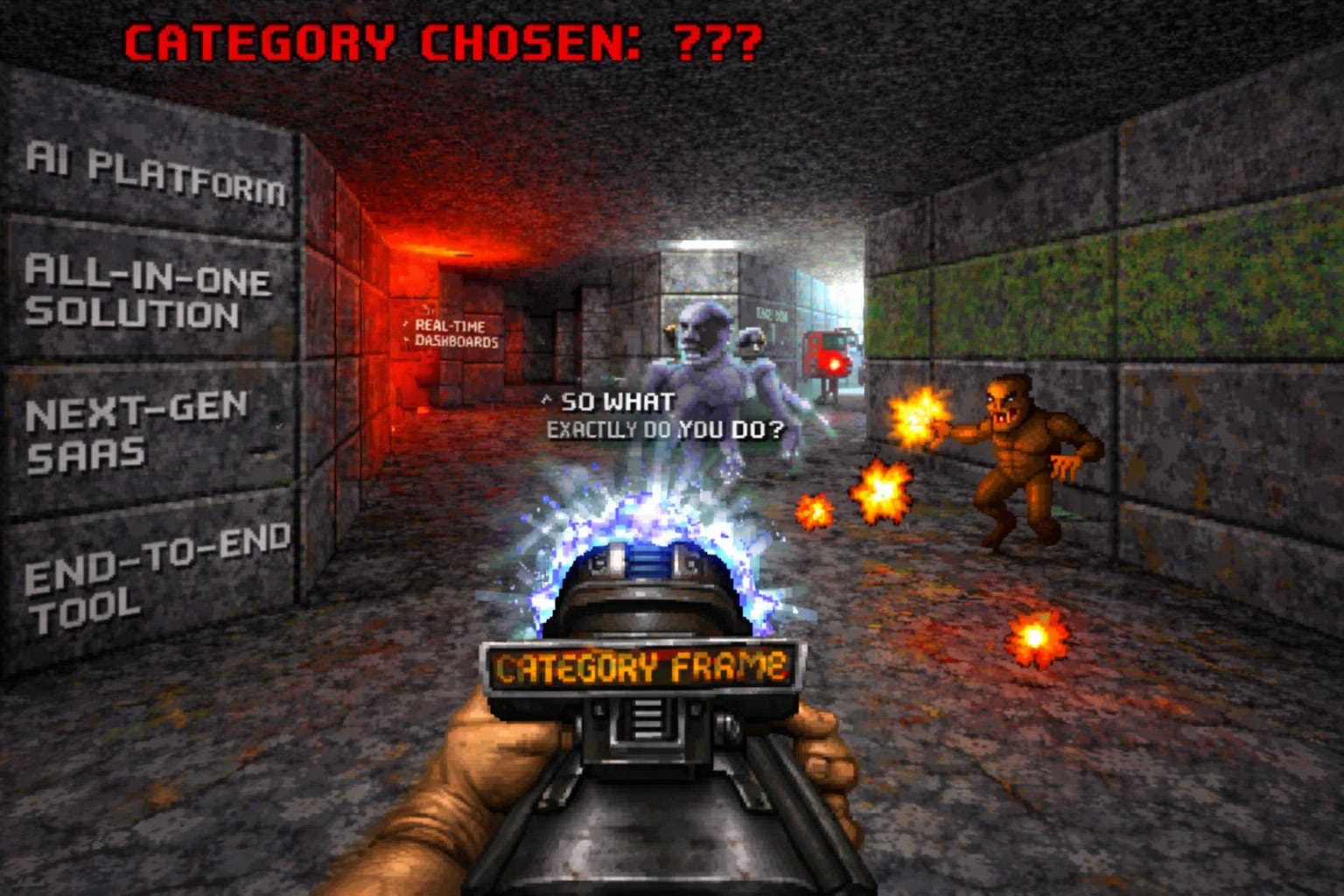
Most early-stage startups default to “AI-powered platform” and then wonder why buyers lump them into commodity comparisons.
2. Point of View: Your Opinion About the World
Strong brand strategy for startups includes a clear point of view about:
Why the current way of doing things is flawed.
What structural shift is happening.
Why your approach aligns with that shift.
This is intellectual positioning.
Shopify did not simply sell ecommerce software. It pushed a worldview: entrepreneurship should be independent from marketplaces. That ideological stance made it the anti-Amazon infrastructure layer for brands.
A weak POV makes you a vendor. A strong POV makes you a thesis.
3. Narrative Architecture: Control the Story Structure
Your homepage is not the brand.
Your narrative architecture is.
It answers, in order:
What problem space are we in?
Why is this problem unsolved or mis-solved?
What new approach makes sense now?
Why are we uniquely credible to deliver it?
Most teams skip steps 2 and 3 and jump straight to “Here’s what we built.”
That forces buyers to do the conceptual work themselves. They won’t.
4. Consistency Across GTM Surfaces
Brand strategy is operational only when it shows up consistently in:
Sales decks
Product naming
Feature prioritization
Content strategy
Pricing logic
Hiring language
If marketing says “enterprise-grade platform” and your product onboarding feels like a hackathon project, the brand collapses instantly.
Brand is the average of what customers experience (not what you claim).
5. Compounding vs Reset Growth
Strong brand reduces CAC over time.
Why?
Because:
Messaging gets sharper.
Market recognition compounds.
Referrals increase.
Sales cycles shorten due to familiarity.
Weak brand forces permanent dependence on performance spend.
If every quarter feels like starting from zero, you do not have a brand system. You have campaigns.
Example
A deep tech infrastructure startup building observability tooling positions itself as “the AI-powered monitoring platform.”
That places them in a saturated category against established players. Buyers compare feature checklists. Sales cycles stall.
Instead, they reframe:
They are not monitoring software.
They are “debugging infrastructure for machine learning systems in production.”
Now:
The comparison set shifts.
Content becomes educational around ML production failures.
Sales speaks to ML engineers, not generic DevOps.
Pricing aligns with model complexity, not server count.
Same product.
Different brand constraints.
Distribution becomes more precise. Sales conversations become more technical and credible.
That is brand strategy.
The Test
Ask yourself:
Can every person in the company clearly articulate the category you compete in?
Do you have a strong, defensible opinion about why the current market structure is flawed?
Does your product roadmap reinforce your positioning?
Would a prospect describe you the way you describe yourself?
If the answers are inconsistent, your brand is not yet a system.